

























































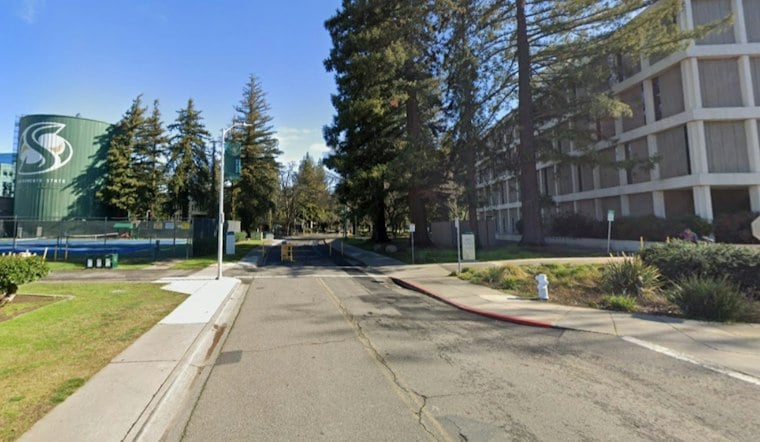
Sacramento State has announced a Presidential Scholars Program that will cover tuition, mandatory fees, books, course materials, supplies and equipment for about 50 high-achieving juniors and seniors at a time. The program is being financed by an anonymous donor's pledge to leave her remaining estate to the university, a commitment described as an eight-figure planned gift and the largest single planned-gift commitment from an individual in Sacramento State's history, The Sacramento Bee reported.
Because the gift will be realized through the donor's estate in the future, its ultimate dollar value is not known. The donor, described by the Bee as a lifelong California educator, said education changed her life and that she wanted future Hornets to have opportunities to complete their degrees and pursue their goals.
A full academic package, not necessarily a full cost-of-attendance award
The published benefit is substantial for students who qualify, but its wording does not establish that it covers every expense of attending college. Sacramento State's Bursar's Office lists room and board separately from tuition, fees, books and supplies. The university's announcement therefore supports describing the award as covering core academic costs, while housing, food and transportation remain unresolved.
That distinction matters when considering students' basic expenses. The California State University legislative report provides systemwide basic-needs reporting for 2024-25, but does not establish Sacramento State-specific student counts. Those figures do not measure demand for the new scholarship, but they show why a tuition-and-materials award should not automatically be treated as eliminating students' financial pressures.
The program's upper-division focus sets it apart
Sac State's program is aimed particularly at high-achieving community-college transfers and other juniors and seniors. It also promises mentoring, career preparation and educational experiences connected to leadership, service and professional development, according to the Bee's account of the university's plan.
That structure differs from a separate CSU research initiative. The 2025 Presidents' Commission Scholars program, administered by the California State University Program for Education and Research in Biotechnology, supported up to 11 undergraduate scholars for summer research, with grants of up to $8,000, including a $6,000 student scholarship and up to $2,000 for the faculty mentor's research program. Its eligibility emphasized first- and second-year students and first-year incoming transfers, rather than Sac State's upper-division, full academic-cost package.
Another campus comparison illustrates that there is no single CSU model for a presidential scholarship. For the 2026 application cycle, California State University, Dominguez Hills says its Presidential Scholarship provides full in-state fees, books and other benefits for up to four years for first-year students or two years for transfer students. Its transfer applicants must come directly from a California community college with at least 60 transferable units. The program is therefore broader in entry point and duration, while Sac State's announced design concentrates support on students already in the upper division.
A planned gift compared with a fixed endowment
The structure of the Sac State commitment also limits what can be compared today. The university has not disclosed a fixed dollar amount, and the estate's eventual value may change before the gift is realized. The Bee reported that university officials worked with the donor for nearly a year to develop the program and intend for the endowment to support students in perpetuity.
At the University of California, Irvine's School of Social Ecology, by contrast, an anonymous alumnus established a disclosed $300,000 endowment intended to provide at least one $15,000 undergraduate scholarship beginning in fall 2027. UCI says that award will include housing and other expenses. The comparison is limited: UCI's is a smaller, fixed gift supporting at least one annual award, while Sac State's is an undisclosed planned commitment designed to maintain a substantially larger cohort.
Sacramento State announced the program Sept. 16. Its eventual reach will depend on the donor's estate, the university's selection criteria and whether the award's final rules add support for living costs. For now, the clearest documented promise is a long-term scholarship covering the principal academic expenses of roughly 50 upper-division students at a time.





